
CBD is legal in Vermont, and you can buy it online since it allows you to have many options in terms of brands and products, and you can view a brand’s information and 3rd party test results before ordering CBD. Meanwhile, in-store shopping allows you to get CBD without delivery fees but does not present many options as online shopping.
Are you new to CBD and would love to know where you can get the best CBD in Vermont? You are headed right; this informational article does not offer medical in favor of CBD but instills confidence in you as you shop CBD by helping you know the legal cannabis climate in Vermont and recommending how to shop CBD locally and online. As a general rule of thumb, the best way to buy CBD is to get it online from reliable suppliers, allowing you have many options to explore and the best prices. Still, you can buy CBD locally to have the products as soon as you need them, but you could pay more than necessary. Here is all you need to know about CBD and cannabis in Vermont, but first, let’s see some basic CBD information.
CBD Basics
You may have realized that CBD is part of the mainstream featured in most products. Following the widespread use of CBD, people need to know it. Maione et al. (2011) and Mascal et al. (2019) defined CBD as a non-psychoactive cannabinoid. Cannabinoids are active chemical compounds in cannabis plants. They may share atoms, but their molecules are differently arranged, resulting in differing effects. It’s no wonder that Silvestri et al. (2015) noted that CBD is non-psychoactive and does not make you high, while Schlienz et al. (2018) found that THC is psychoactive and will likely make you high. CBD can come from cannabis or hemp; the 2018 Farm Bill recognizes hemp-derived CBD with less than 0.3% THC as legal.
CBD Categories- CBD Formulations
Besides the CBD definition, you must know the CBD classes or categories. Such are the types of CBD classified based on composition. You can enjoy CBD in one of the following three formulations;
- Isolate CBD; is CBD without extra compounds and is the purest form of the cannabinoid. Having no terpenes or flavonoids, isolates are flavorless and do not have the earthy taste of cannabis.
- Full-spectrum CBD; is the most sought type of CBD since it offers the cannabinoid with other compounds. It has THC, terpenes, flavonoids, CBD, and other cannabinoids.
- Broad-spectrum CBD; if you want to enjoy full-spectrum CBD but cannot because of the THC content, you can try broad-spectrum CBD, which has many compounds without THC.
No CBD formulation is better than the other. Rather, your choice depends on what you want. As novices and people who take drug tests go for isolates, you can settle for full- or broad-spectrum CBD if you want additional cannabis compounds with and without THC.
CBD Products for You
CBD products are like vehicles that deliver CBD to the body since cells cannot directly absorb CBD as a compound. As with CBD types, no product is better than the other, and your choice depends on what you want. For example, you can choose your ideal products based on flavor, fast delivery, and external application benefits. Here are the available CBD products for you;
- CBD vapes; are inhaled to allow CBD to reach the bloodstream fast but can irritate the lungs.
- CBD oils and tinctures; are liquid CBD based in oils or high-proof alcohols and are typically bitter. They come second after CBD in fast delivery.
- CBD edibles; unlike CBD oils that are bitter, edibles are sweet, allowing you to enjoy CBD. However, they take to relay the desired effects since they need time for digestion.
- CBD capsules; like edibles, capsules mask the bitter CBD taste and take time to express CBD effects. However, they are not as sweet as edibles, making them great for people who need edibles but cannot bear with their sweet nature.
- CBD topicals; are best applied to the skin to manage pain, inflammation, or both externally. Still, more research is needed to prove them effective.
Have you chosen your preferred CBD product? It’s time to find out how Vermont views CBD.
Is CBD Legal in Vermont?
Can you legally enjoy CBD in Vermont, or will doing so land you in jail? Thanks to the 2018 Farm Bill, CBD was declared legal as long as it came from hemp and had less than 0.3% THC. Thus, you can legally possess CBD in Vermont without rubbing shoulders with authorities. You can buy CBD in Vermont locally, although the best shot you could ever give CBD is to shop it online. Here is how the two forms of shopping compare, helping you settle for one.
Where to Buy CBD in Vermont- Shopping Online
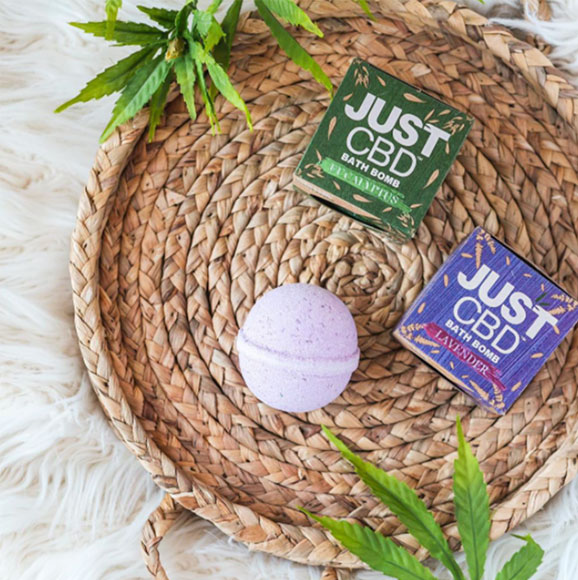
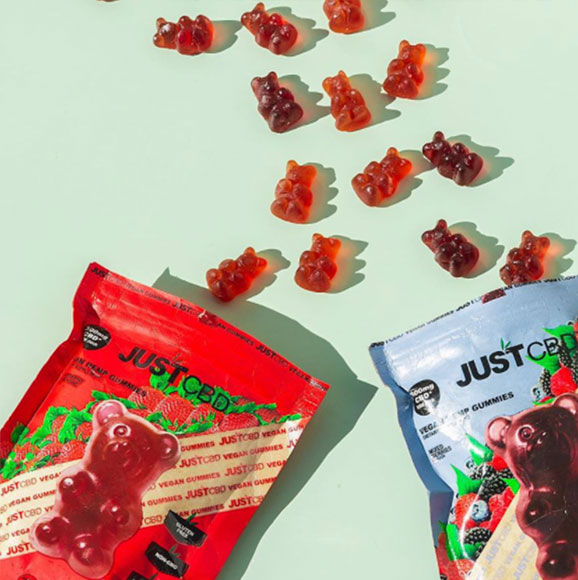
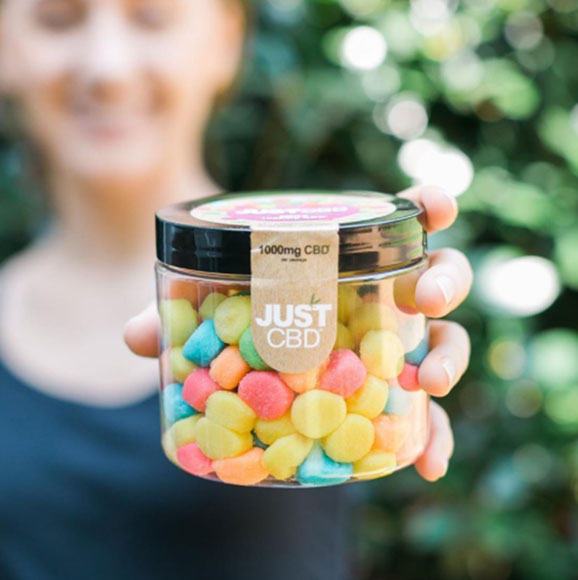
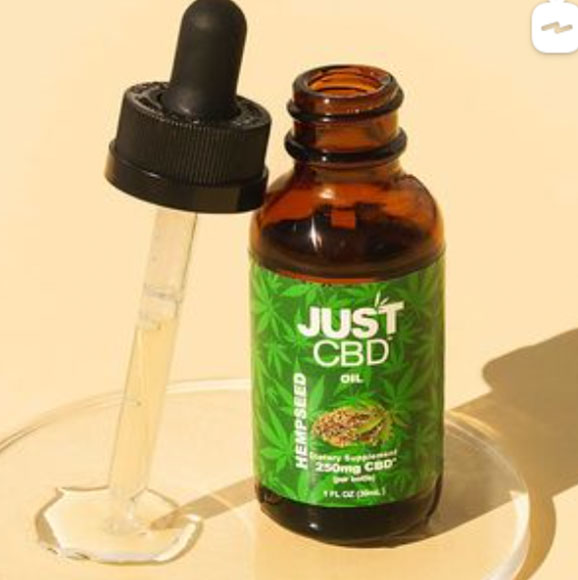
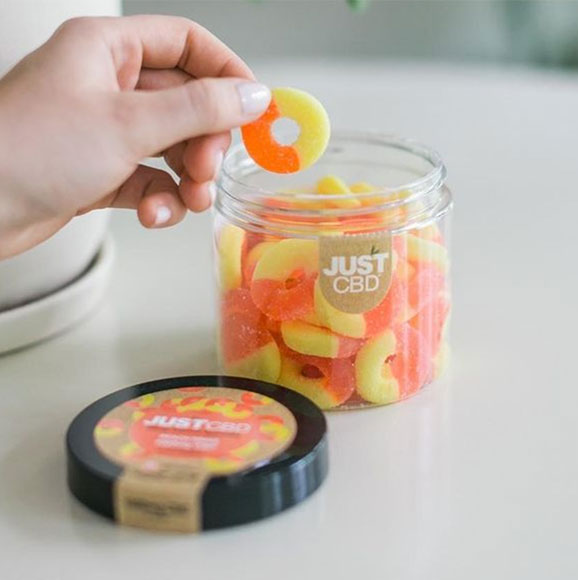
JustCBD is one of the best CBD retailers and wholesalers whose CBD you can trust if you want to buy CBD online. Based in the US, it uses quality hemp from the US to make CBD, processes the hemp in GMP-certified labs, and posts online for easy viewing. Online shopping gives you the advantage of having many brands and products to choose from, so you can find quality items at the best prices. Besides, it allows you to have enough background information about a company and view its 3rd party test results before placing your orders. At JustCBD, you can buy gummies, honey sticks, oils, vape, and other CBD items you need. When you shop online, you can tap into free shipping and other incentives, allowing you to save on purchases. Why not give online CBD shopping a shot today?
Where to Buy CBD in Vermont- Shopping in the Stores
You can still find CBD locally if you don’t fancy online shopping. There are many vape stores, natural health outlets, and head shops in Vermont you could visit to buy CBD locally. Northern Lights, Valley Vape, Up In Smoke, and Good Stuff are some of the best points to get CBD in Burlington, South Burlington, and Rutland with the best CBD. Shopping in-store means you need not pay delivery fees or wait a day or 2 days for CBD to arrive since you have them as soon as you order them. Besides, you can confirm every small detail you need, yet you will likely pay more than online shopping. Moreover, you will likely not view a brand’s information before buying its products or 3rd party test results, which is quite critical.
How to Buy Quality CBD in Vermont
Although hemp-derived CBD with less than 0.3% THC is federally legal, the FDA does not oversee CBD production, and it’s not surprising that you can easily land low-quality CBD that does not deliver as much as they claim. Thus, you must ensure you get nothing but quality CBD and that the products do not clash with the state’s laws. Here are tips on how to do so;
- Focus on brands that work in labs and liaise with 3rd party labs to test the quality of CBD and post the lab test results online for easy viewing.
- Avoid CBD companies that claim to work miracles, especially because there is insufficient evidence to prove that CBD can heal or cure anything.
- Ensure the CBD products you buy are full-spectrum formulated to get CBD and extra cannabis compounds.
- Do not settle for the cheapest CBD at the expense of quality; you need a product that delivers, and you must be willing to spend.
- Confirm the THC levels in the CBD product, and ensure the CBD item does not have more than 0.3% THC, federally recognized as the maximum threshold.
Cannabis Laws: Is Medical Cannabis Legal in Vermont?
In 1915, Vermont prohibited cannabis, which was not strange, considering that many American states were doing the same. However, in 1967, it reduced the penalties for small cannabis possession to 6 months. In the 1980s, the Vermont Cannabis Therapeutic Research Program allowed medical use of cannabis, in which people with cancer and severe medical conditions used marijuana to manage some symptoms. In 2004, Vermont became the 9th state to have a medical cannabis registry in the US. Still, it was until 2011 that the first 4 medical cannabis dispensaries were opened, and service was limited to 1000 patients. In 2014, the patient limit was removed, and you can use cannabis for medical reasons. If you have one of the Vermont eligible medical conditions, you can legally access medical cannabis and plant 2 mature cannabis plants and 7 seedlings. Still, you must not smoke publicly or gift medical cannabis.
Cannabis Laws in Vermont: Is Recreational Cannabis Legal?
Like medical cannabis, recreational cannabis is legal in Vermont. In 2018, the state signed a bill into law, allowing residents aged 21 years and above to use recreational cannabis legally. Still, this was limited to 1 ounce of cannabis, and anything more is punishable by jail terms and fines, as explained in the next section. Besides, 21 years and above Vermont residents are allowed to plant 2 mature cannabis plants and 4 seedlings. Still, they must not smoke publicly or gift CBD lest they get fined or spend time in the small rooms with no space (jail).
Penalties for Cannabis Possession
While recreational cannabis is legal in Vermont, it is limited to 1 ounce, and anything more than this is punished. 1st offense warrants 6-month jail time and a $2,000 fine, while a 2nd offense translates to 1 year in jail and a $2,000 fine. More than 2 ounces of marijuana takes you to jail for 3 years, and a $10,000 fine applies. Gifting people cannabis is illegal and results in 5-year jail time while driving under the influence of cannabis is charged by DUI.
Is Delta- 8 THC Legal in Vermont?
While cannabis is legal in Vermont, delta- 8 THC is not. Studies like Bozman et al. (2022) note that delta- 8 THC is milder than delta- 9, which is why many people like it. Sadly, the milder THC variant is banned in Vermont. The only way to consume it is to wait for the state’s cannabis laws to flex a little and accommodate delta- 8 THC.
Conclusion
Vermont allows you to access hemp-derived and cannabis-derived CBD legally. You can find the former online or locally in head shops, vape stores, and natural outlets, although the best way to get CBD is to buy it online. This option allows you to have many options to choose from, view 3rd party test results before buying CBD, and read about a brand’s information before ordering anything. Cannabis is fully legal in Vermont, and you can find medical cannabis and its CBD in dispensaries, although there are currently no recreational dispensaries. Delta- 8 remains illegal in Vermont, and the only way to get it is to travel to a state that allows its legal consumption.
References
Bozman, M. E., Manoharan, S. V. R. R., & Vasavada, T. (2022). Marijuana Variant ofConcern: Delta 8-tetrahydrocannabinol (Delta-8-THC, Δ8-THC). Psychiatry
Research Case Reports, 100028.
Maione, S., Piscitelli, F., Gatta, L., Vita, D., De Petrocellis, L., Palazzo, E., … & Di Marzo,
V. (2011). Non‐psychoactive cannabinoids modulate the descending pathway of
antinociception in anaesthetized rats through several mechanisms of action.
British journal of pharmacology, 162(3), 584-596.
Mascal, M., Hafezi, N., Wang, D., Hu, Y., Serra, G., Dallas, M. L., & Spencer, J. P. (2019).
Synthetic, non-intoxicating 8, 9-dihydrocannabidiol for the mitigation of seizures.
Scientific reports, 9(1), 1-6.
Schlienz, N. J., Lee, D. C., Stitzer, M. L., & Vandrey, R. (2018). The effect of high-dose
dronabinol (oral THC) maintenance on cannabis self-administration. Drug and
alcohol dependence, 187, 254-260.
Silvestri, C., Paris, D., Martella, A., Melck, D., Guadagnino, I., Cawthorne, M., … & Di
Marzo, V. (2015). Two non-psychoactive cannabinoids reduce intracellular lipid
levels and inhibit hepatosteatosis. Journal of hepatology, 62(6), 1382-1390.